
.svg)



.svg)
.svg)
.svg)
.svg)
FPV Drone Videography (2026) What It Is, When to Use It, and How to Hire the Right Team By Flymark | 2026 Edition
What is FPV Drone Videography?
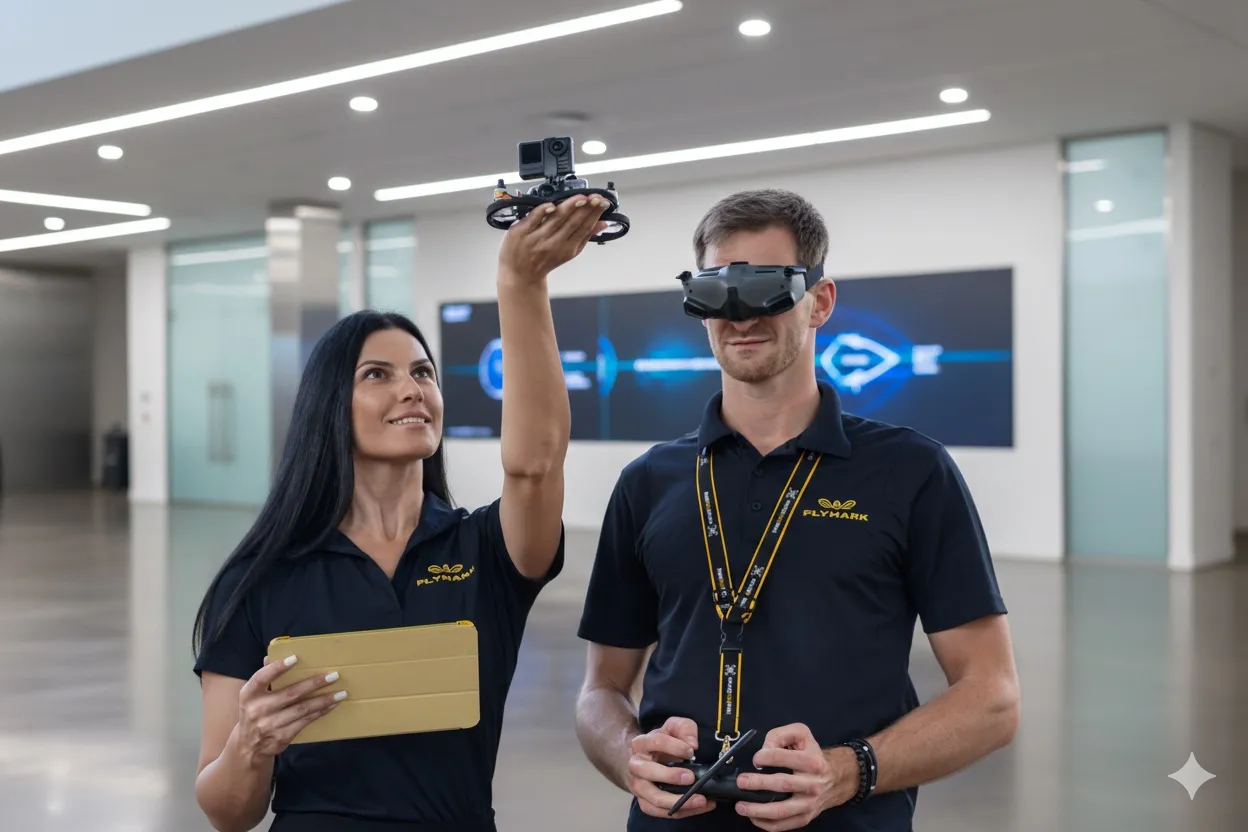
FPV (First-Person View) drone videography uses goggles that show a live feed from the drone's camera. The pilot flies in real time with precise control, creating smooth fly-throughs, fast passes, and single-take sequences—even in tight spaces like lobbies, pools, or building interiors.
Unlike standard GPS drones that hover and pan for stable wide shots, FPV prioritizes speed and agility. The result is dynamic footage that pulls viewers right into the space, making it feel alive and personal instead of distant.
It's perfect for hospitality marketers, real estate developers, campus teams, venue operators, and brands that want high-engagement video for social feeds, websites, or campaigns.
What Makes FPV Different from Standard Drone Footage
Standard GPS drones (like Mavic-style) focus on stability—they deliver clean aerial overviews and establishing shots. FPV trades some stability for quick, responsive movement. The pilot plans a path, rehearses it, and flies a choreographed route that becomes the core of the edit.
"FPV doesn't just show a place—it moves you through it, creating an exciting, personal experience." — Flymark Production Lead
Who It's For
FPV shines as a premium tool for specific needs:
- Hotels and resorts for arrival-to-amenity tours
- Real estate projects highlighting flow and scale
- Universities and campuses replacing flat virtual tours
- Event venues, retail spaces, and warehouses showing operations
- Brands and agencies creating fast, attention-grabbing social content
[See our full FPV production capabilities → FPV Drone Services 2026]
When FPV Makes Sense — and When It Doesn't
FPV excels when movement tells the story. Use it for immersive, one-take sequences that build excitement. Skip it for interviews, close-up details, or static maps.
Best-Fit Scenarios
- Continuous paths through spaces or experiences
- Locations with strong architecture, flow, or scale
- Social channels like Meta, TikTok, YouTube Shorts, or website heroes that favor high-retention clips
- Replacing longer shoots with one high-impact sequence
- Goals focused on awareness, emotion, or consideration
Better with Traditional Tools
- Interview or testimonial footage
- Product close-ups, food, or lifestyle details
- Restricted or compliance-heavy sites
- Wide overhead context shots
"We use FPV when motion helps sell the story and lets people feel the space—not just see it." — Brand-Side Marketing Director
Decision Tree: Choose This If…
- High-energy outdoor reveal → Large Cinema FPV (outdoor rig) — Fast, dramatic momentum
- Smooth indoor tour (hotels/offices) → 3-inch Cinewhoop (ducted props) — Safe, precise in tight areas
- Crowded venue or near people → Sub-250g Micro FPV (ducted) — Lowest risk near guests
- Wide exterior context → Traditional GPS Drone — Stable establishing shots
- People-focused detail/testimonials → Handheld Gimbal — Intimate human scale
- Full brand story → FPV hero + GPS + Gimbal mix — Complete package
- Simple social clip, budget under $5k → Entry Cinewhoop package — Confirm deliverables match needs
FPV vs. Traditional Drone vs. Gimbal: Quick Comparison
- FPV Drone
Best For: Immersive tours, venue reveals
Key Strength: Fluid, energetic movement
Key Limitation: Needs skilled pilot + planning
Marketing Role: Hook (first 3–5 sec), hero video
- Traditional Drone
Best For: Aerial overviews, scale shots
Key Strength: Stable, wide-angle footage
Key Limitation: Less agile indoors
Marketing Role: Sets location and context
- Handheld Gimbal
Best For: People, details, interiors
Key Strength: Controlled, human perspective
Key Limitation: Limited range/height
Marketing Role: Builds character and connection
Indoor vs. Outdoor FPV: How to Pick
Indoor FPV — Great for lobbies, corridors, atriums, or trade floors in one continuous take. Uses smaller cinewhoops (2–3 inch with ducted props) for safety, precision, and low noise. Ideal for hotels, offices, campuses, venues, and retail.
Outdoor FPV — Unlocks speed: fast approaches to entrances, sweeps over pools, or high departures showing full context. Larger rigs add drama for resorts and real estate.
Hybrid — Start outside, enter interiors, exit to amenities. Needs scouting, staff coordination, and safety briefs. [Flymark Example: Mixed-use property route — exterior approach → lobby → pool reveal → portfolio ]
Is Your Location FPV-Ready?
Pre-Shoot Checklist:
- Clear flight path mapped
- Low-traffic timing window booked
- Indoor approval from management
- Spaces prepped (furniture, signage, styling)
- Safety barriers agreed
- Full access confirmed (including service areas)
- Hazards (fans, ceilings, wires) identified
Equipment Types: Buyer View
- Micro FPV (sub-250g) — Best Environment: Tight interiors, near people — Buyer Benefit: Safest indoors; nimble — Tradeoff: Less outdoor drama
- Cinewhoop (2–3 inch ducted) — Best Environment: Commercial indoor/mixed — Buyer Benefit: Smooth cinematic shots; protected — Tradeoff: Needs route planning
- Cinema FPV (5 inch+) — Best Environment: Outdoor, open venues — Buyer Benefit: High energy, fast sequences — Tradeoff: Not for tight spaces
- Stabilized hybrid — Best Environment: Indoor-outdoor blend — Buyer Benefit: Balanced look for brands — Tradeoff: More setup time
Ask: Can footage crop to 9:16 for social without losing key elements? Does a 15-second edit hold attention? A good team answers these upfront.
How FPV Production WorksPre-Production — Most quality comes here: brief goals, scout locations, design routes, assess safety, plan shots. Skipping this leads to mismatched results.
Shoot Day — Follow the route with a visual observer watching line-of-sight. Multiple takes give edit options. No usable audio recorded—sound (whoosh, ambiance) added in post.
Post-Production — Select takes, pace, add licensed music/sound design, grade color, create versions (hero 16:9, social 9:16, ads, loops).
Workflow
- Discovery (goals, KPIs, deliverables)
- Planning (scout, route, gear)
- Safety review (risk plan, COI, venue coord)
- Shoot (multi-takes + support footage)
- Edit (pacing, sound, versions)
- Delivery (all formats)
Safety, Insurance, Compliance: Must-Asks
Commercial FPV needs FAA Part 107 for pilots, visual observer for goggle flights, and insurance. Indoor often skips FAA airspace rules but requires venue approval and protocols.
Request These
- Part 107 certification
- Certificate of Insurance (COI, $1–2M liability, you as additional insured)
- Written risk assessment
- Visual observer on every flight
- Venue coordination/permit
- Indoor safety plan
Safety Questions
- Part 107 certified?
- COI provided?
- Visual observer always?
- Risk assessment details?
- Indoor near-guests protocol?
- Similar venue experience?
- On-site route change plan?
[Flymark Safety: Part 107, COI details, VO protocol, venue experience ]
Deliverables: What You Get
- Hero Video — Purpose: Website/campaign — Format: 16:9 — Typical Length: 60–90 sec
- Social Cut — Purpose: Reels/TikTok/paid — Format: 9:16 — Typical Length: 15–30 sec
- Paid Ad — Purpose: Pre-roll/programmatic — Format: 16:9/9:16 — Typical Length: 6–30 sec
- Loop — Purpose: Website header — Format: Muted loop — Typical Length: 10–20 sec
- Brand Edit — Purpose: Full recap — Format: 16:9 — Typical Length: 90–120 sec
- Raw (optional) — Purpose: Future use — Format: Original — Typical Length: Full output
Clarify Upfront
- Revision rounds included?
- Vertical versions in base price?
- Music rights (web/social/broadcast)?
- Raw footage?
- Turnaround time?
- Ownership/usage limits?
Buyer Quick Checklist: Before Hiring
- Relevant portfolio from similar venues?
- Safety/compliance stack (Part 107, COI, VO)?
- Clear pre-production process?
- Platform deliverables included?
- Marketing goals discussed (not just shots)?
- Revision/scope policy in writing?
- Venue logistics experience?
- On-site change handling?
"A great FPV partner explains the plan, controls risks, and delivers files your team can use right away." — Brand-Side Marketing Director
Common Mistakes to Avoid
- Picking on price/reel alone (thin process = unusable files)
- No pre-planned route (leads to weak edits)
- Ignoring sound design (impressive but empty footage)
- Assuming any drone pilot does commercial FPV (needs specific skills/gear)
- Skipping deliverables scope (causes costly revisions)
FAQs
- Simple definition? Pilot flies via goggles for live view, enabling smooth, immersive paths traditional drones can't match.
- Best businesses? Hotels/resorts, real estate, universities, venues, brands needing standout social/video.
- Safe indoors? Yes—with cinewhoops, ducted props, planning, approvals, and protocols.
- Cost range? Varies by scope/location/deliverables. Entry packages start a few thousand dollars; full productions (multi-formats, post) run higher. [See packages → FPV Drone Video Pricing 2026]
- Timeline? 2–4 weeks typical: 3–5 days pre-pro, 1–2 shoot days, 7–14 days edit/revisions.
Work With Flymark
We create FPV assets that perform—scoped to your goals, channels, and timeline. We blend FPV with GPS/gimbal for complete packages, starting with your brief and ending with ready-to-use files.
[See client work → portfolio ]
Ready for FPV that fits your marketing—not just cool shots?

Video Marketing Benefits for Business | Flymark Blog
With audience attention spans shortening, content marketing must be digestible to remain engaging.The blog talks about the benefits of video marketing for the modern day consumer and how you can leverage it for your digital marketing strategy.

How to Increase Landing Page Conversions with Video
Static images and lengthy texts do little for high viewer engagement. Videos help add a dynamic element to your landing pages that emotionally appeals to online viewers, boosting conversion rates and ROI.This blog talks about the benefits of video landing pages and strategies for video placement to maximize lead generation.
Indoor FPV Drone Video in 2026 for Brands | Flymark
This 2026 guide explains why indoor FPV drone video has become an essential marketing tool for brands, real estate, hospitality, and industrial clients, delivering unmatched spatial immersion and significantly longer viewer dwell times compared to traditional photos, 360° tours, or handheld video. It covers key benefits, realistic pricing benchmarks, strict safety protocols, vertical social media optimization, and practical advice for choosing professional providers. The article positions Flymark as a trusted, safety-first, marketing-oriented partner ready to help create high-ROI immersive content tailored to your specific project needs.