
.svg)



.svg)
.svg)
.svg)
.svg)

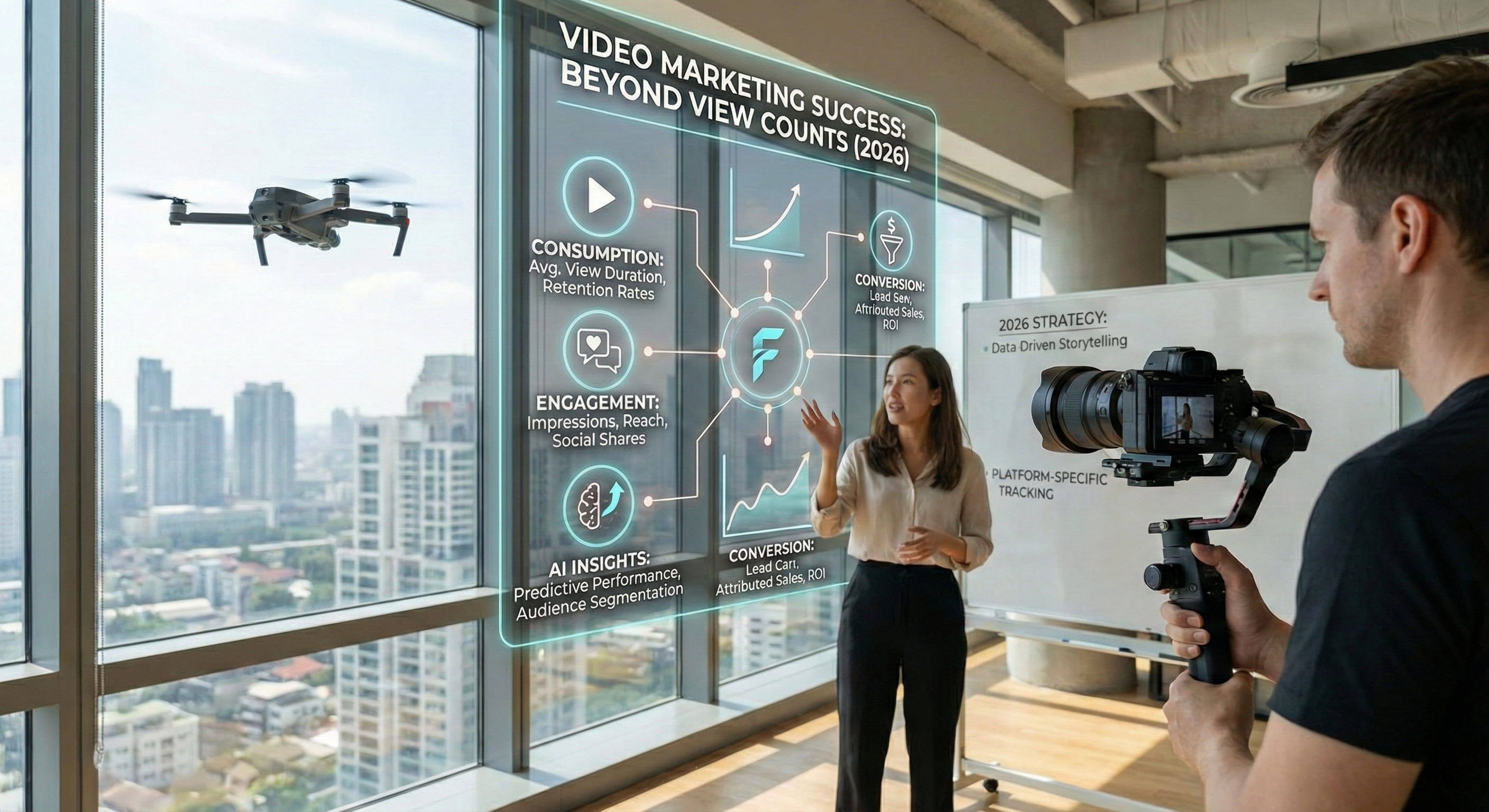
Video marketing success is measured on a lot more than just view counts.
This insight explores the different ways to measure video marketing campaigns for sustained performance.
Core Performance Metrics for Video Consumption and Audience Engagement
Reach and Awareness
Engagement metrics like impressions, unique viewers, and reach tell you how many people are seeing your video content. Understanding your reach is important because it helps gauge the size of your content strategy, and see how effective it is. This initial exposure is the first step in drawing viewers into your brand's narrative.
Engagement and Consumption
Effective metrics analysis includes view count, average view duration, and completion rates. Watch time, in particular, is an indicator of how many people stay until the end of the video. Video content that has high average view durations and completion rates signal arresting visual content that grabs the viewer's attention. Engagement rate, encompassing likes, comments, and shares, still plays a role in gauging audience sentiment and content shareability.
Audience Behavior and Interaction
When you look closely at the audience retention rates, you can see how long your audience is staying until the end of the video. You find out where people are losing interest and stopping, and in turn, use this data for your next video production to make your videos better and more interesting.
Moreover, demographic insights help fine-tune your understanding of who your audience is, and how well your content is resonating with them. This allows you to make adjustment to your video marketing strategy as you see fit.
Conversion and ROI Metrics: Connecting Video to Business Outcomes
Direct Conversion Metrics
When people watch your video, direct conversion metrics show what actions they take next. For example, they might click on something in your video, fill out a form to get information, download something or sign up for an event. These video metrics include click-through rate from video calls-to-action, lead generation form submissions, downloads or event registrations.
Revenue and Business Impact Metrics
The efficacy of any video content strategy depends on how much money it makes. Metrics like video-influenced sales, customer lifetime value (CLV) improvements, and attributed revenue directly show you the impact of your marketing efforts.
Cost-Efficiency Metrics
Metrics such as Cost Per View (CPV) and Cost Per Acquisition (CPA) via video help ensure your campaigns are efficient. By analyzing these figures, you can optimize your budget allocation, ensuring you're acquiring viewers and driving conversions at a sustainable cost.
Platform-Specific Tracking
YouTube Analytics
With over 2.49 billion users, YouTube is the largest streaming platform in the world. It's analytics platform includes subscriber growth, audience demographics, traffic sources, and comprehensive audience retention graphs. Never forget to cater to diverse audience preferences such as YouTube shorts.
TikTok and Instagram Reels
Short-form video content such as on TikTok, Instagram Reels, and YouTube Shorts give a deeper insight when you track metrics such as impressions, reach, shares, saves, and unique viewers. While engagement rates are higher, they are less likely to give you a complete picture of performance, meaning understanding completion rates and re-watches within short loops helps.
Website and Landing Page Videos
Metrics like bounce rates, time spent on page, and conversion rates of visitors who watch your videos versus those who don't, are perfect landing page and website metrics to understand how your video influences on-site actions.
Email and Other Distribution Channels
For email marketing campaigns, track the click-through rates of video thumbnails or links. For other marketing channels, identify the direct traffic driven to your site, and conversions attributed to those referral sources.
AI Video Metric Analysis in 2026
Automated Insights and Predictive Analytics
Artificial intelligence is changing the way we look at analytics. Through AI, we can use automated tools to find trends and predict campaign performance. These tools can also point out potential problems, enabling you to make adjustments to your video marketing strategy as needed.
Enhancing Audience Understanding
AI can analyze large datasets to reveal intrinsic patterns in audience behaviour, sentiment, and preferences. This helps gauge the accurate segmentation of your target audience to create emotionally appealing video content.
AI-Driven Optimization and A/B Testing
AI's analytics tools can optimize everything from video A/B testing parameters to distribution schedules. By analyzing video ROI metrics in real-time, AI tools can recommend the best thumbnails, ad copy, and posting times to maximize reach, audience engagement, and conversion rates.
Wrapping Up
Data driven decisions allow for more effective digital marketing campaigns. They allow marketers to achieve tangible conversions and demonstrate measurable ROI across all online channels such as YouTube, Meta platforms, and your own company website.
With Flymark, you set measurable marketing goals that churn results. We thoroughly access performance across multiple marketing channels, and optimize the video assets for long-term ROI.
Blog

FPV Drone Video Pricing (2026): Packages, Day Rates, Editing Costs
Indoor FPV flythrough and drone video pricing for 2026, with clear packages and usage rights. See real ranges, pick your tier, and schedule a Flymark discovery call.

FPV vs. Traditional Drones: What's the Best Choice for Your Marketing Campaign?
FPV drones offer an immersive, cinematic perspective that traditional drone footage can't match. FPV drone tours deliver higher social engagement and a stronger ROI by turning simple promotions into memorable experiences.
How to Use Drone Videos to Engage Your Audience
Brands find it challenging to generate content that captures interest, and sustains long enough to get a point across or have customers take action. This blog talks about how FPV drones create compelling visual narratives that drives customer engagement, and business growth.
"From Sky to Screen, Let Your Business Win"
Quick Links
Services
Contact Us
info@flymark.us
Phone
(321) 240 - 9457
Address
924 N MAGNOLIA AVENUE
STE 202
ORLANDO, FL 32803
.svg)
We Serve Clients Nationwide
Satellite Locations:
Miami | New York | Los Angeles